- PPTX account plans generated from live account data.
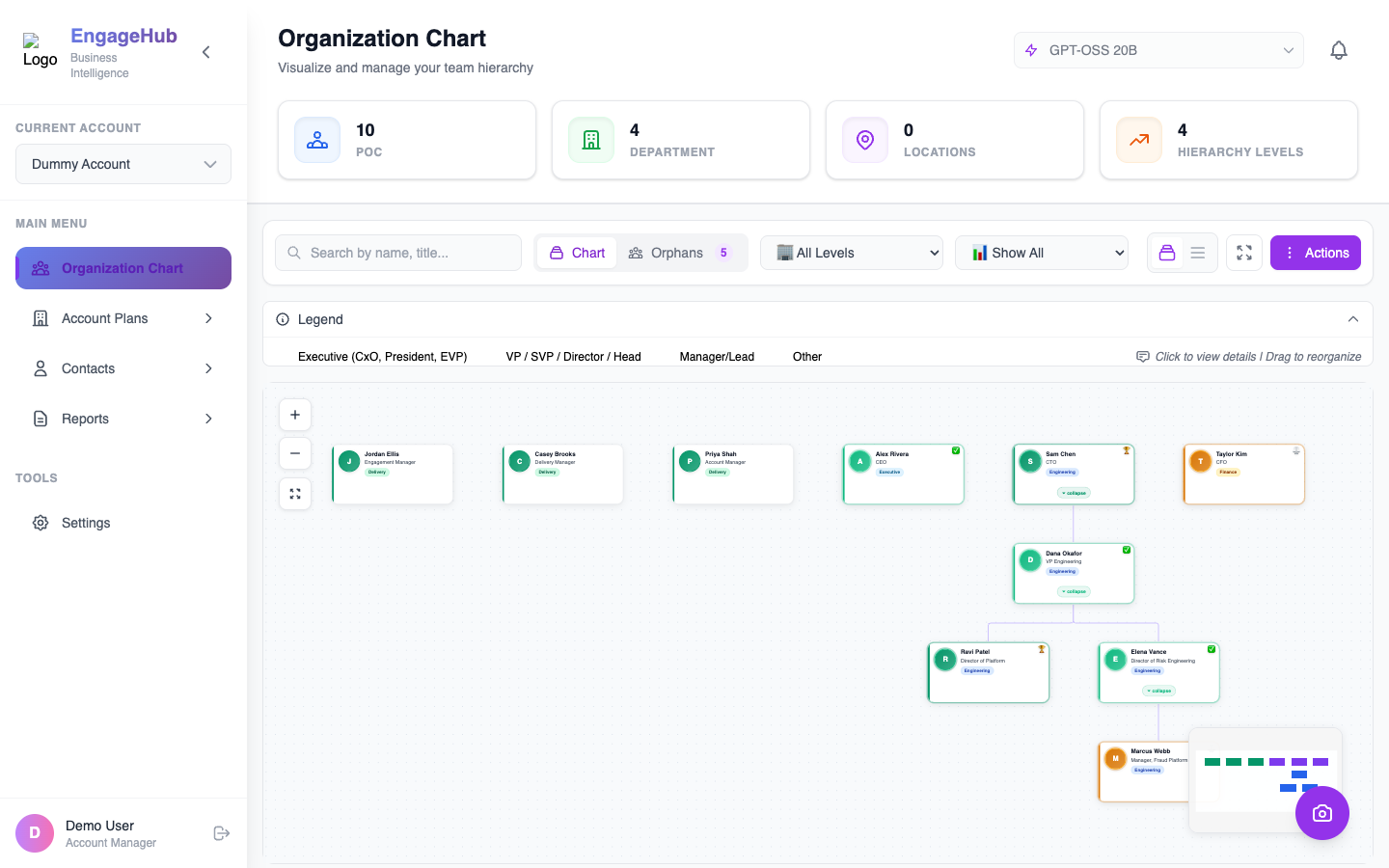
- Interactive org chart with bulk manager reassignment.
- RBAC, per-menu permissions, TOTP MFA and Vault-backed secrets.
Problem
Enterprise account planning lives in scattered decks, spreadsheets and inboxes. The account plan a team presents is usually assembled by hand the week before it is due, which makes it a snapshot of whoever remembered what, not of the account.
Approach
Treat the account plan as a generated artifact rather than a document. If contacts, notes and hierarchy are captured as structured data during the ordinary course of work, the deck can be produced from that data on demand. That shifts the effort from assembling slides to keeping the underlying record honest.
Solution
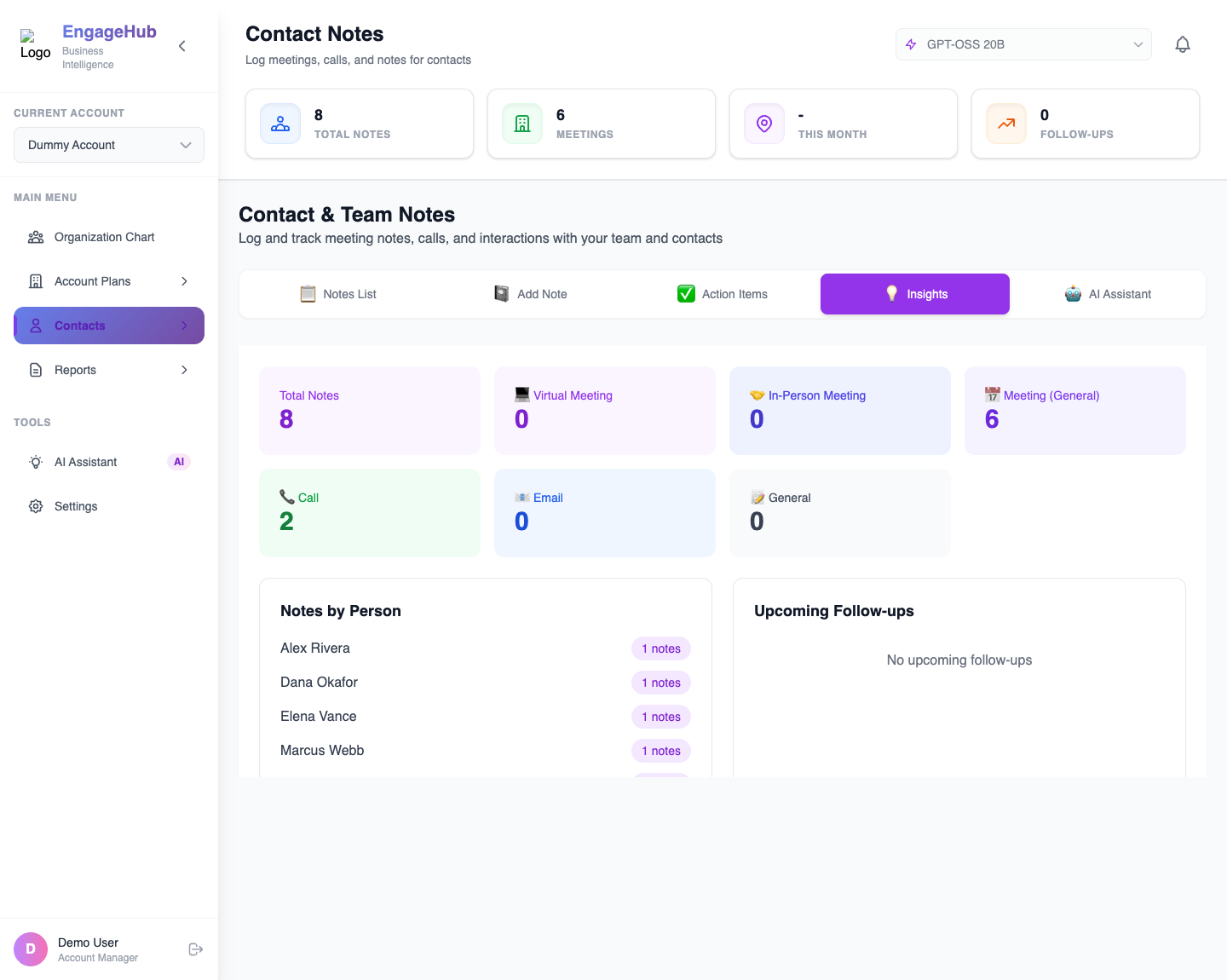
A Flask application over PostgreSQL with a pluggable AI layer, so chat over contact notes can run against Gemini, OpenAI or Anthropic. Account plans are generated as PowerPoint from live data. The org chart supports drag-and-drop reassignment and a three-step guided flow for transferring all direct reports from a departing manager. Access is governed by role-based control with granular per-menu permissions, TOTP multi-factor authentication and HashiCorp Vault for secrets. Infrastructure ships alongside the application as Terraform and Ansible, with an Outlook add-in and an external API surface.
Impact
EngageHub reduces account planning from deck assembly to data stewardship: keep the relationship record current, then generate plans, org views and note intelligence from it when needed. It also proves the idea as a production-shaped system rather than a demo, carrying authentication, authorization, secrets and infrastructure alongside the application.